
In 2022, the Buncombe County Justice Services Department (BCJS) began laying the groundwork for a comprehensive community violence prevention and intervention approach. Through implementation of the Community-based Public Health Response to Violence (CPrV©) strategy, BCJS is working towards building community cohesion and collective efficacy to prevent violence. CHASM, a non-profit directed by CPrV© model founder Abdul Hafeedh bin Abdullah, has been providing technical assistance, model fidelity guidance, coaching, and expertise on how to scale CPRrV© infrastructure across the broader Buncombe County.
The strategy integrates key principles of community-based, community led public health thinking and methodology in partnership with a multitude of sectors. To ensure that community voices and perspectives guide the implementation of programming, the Asheville Buncombe Institute for Parity Achievement is conducting community-based participatory action research and evaluation activities. Additionally, the Center for Participatory Change co-facilitates the Multisectoral Stakeholder Coalition alongside BCJS, where partners are engaged to collaborate on integrated violence prevention strategies. The Coalition brings the community together alongside county and city leadership to discuss community issues to provide real-time solutions to system and interpersonal violence.
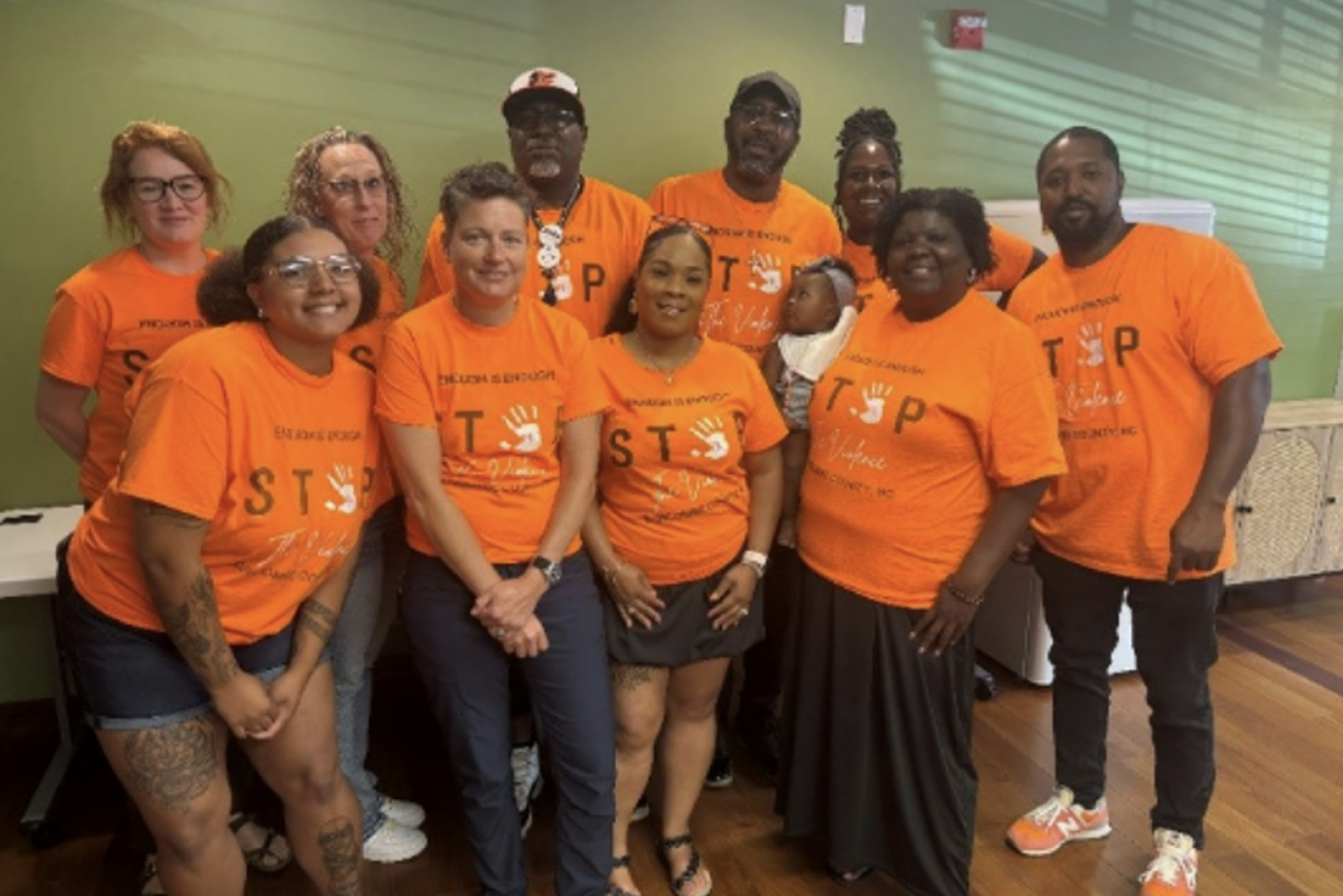
Leveraging multiple key partnerships in the county and surrounding region, BCJS employs evidence-based practices that are geared towards training community health workers as violence prevention professionals, supporting youth development, and repurposing the built environment. One key initiative includes the Providing Education and Advocacy through Community Engagement (P.E.A.C.E.) Team. Committed to fostering peace, health, and unity, the P.E.A.C.E. team is a dedicated group of community members trained as Community Health Worker-Violence Prevention Professionals (CHW-VPPs). In partnership with community organizations, the team supports youth and communities in accessing the resources that are needed to live healthy, safe, and thriving lifestyles.
BCJS’s approach highlights the powerful impact that community partnerships and collaboration have in strengthening and advancing community violence intervention and prevention practices.