
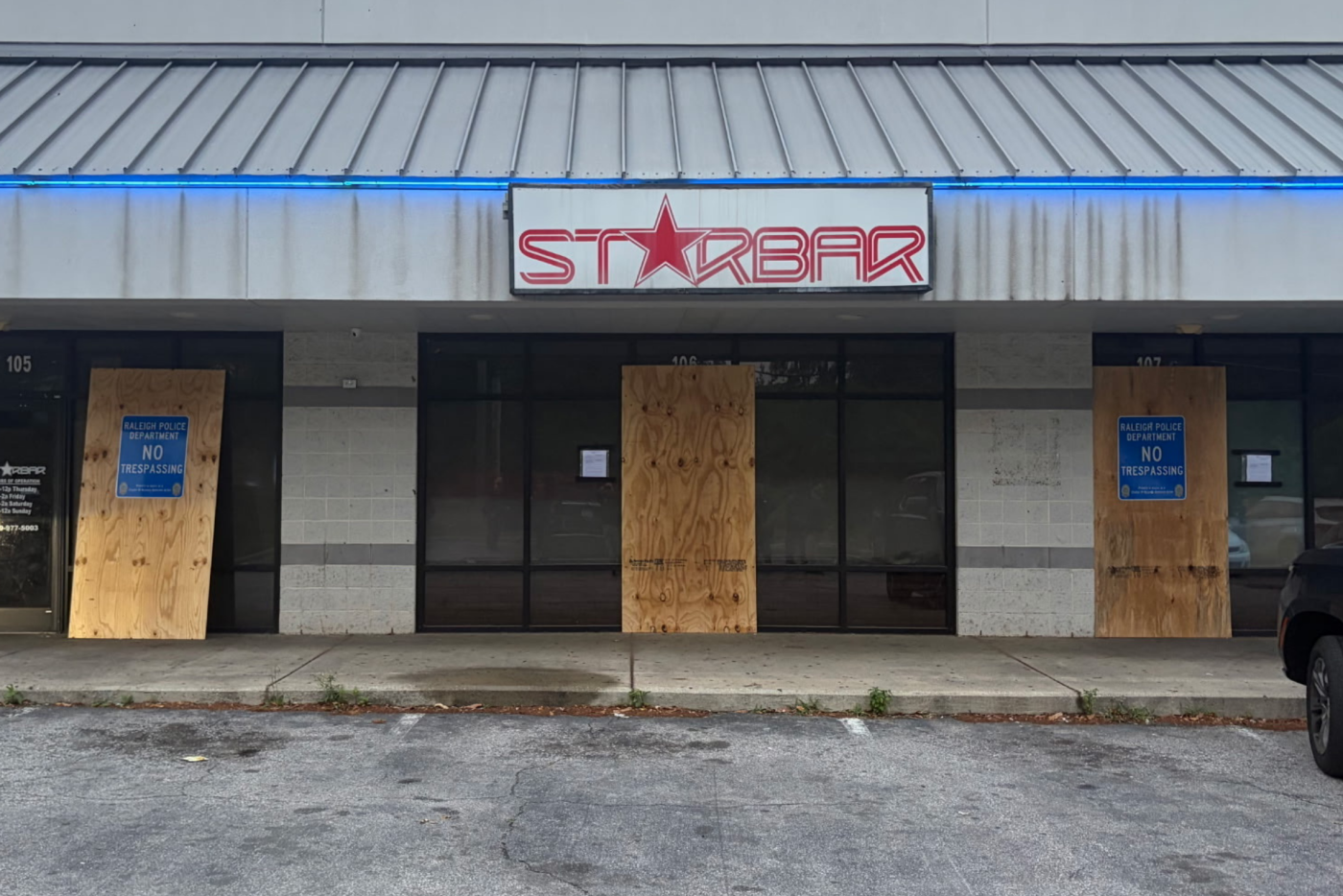
Following a prolonged period of criminal activity at StarBar, located at 1731 Trawick Road in Raleigh, the Raleigh Police Department (RPD) requested assistance from the North Carolina Alcohol Law Enforcement Division (ALE) in April 2026 to pursue a civil nuisance abatement action for the establishment. As a result of this joint law enforcement investigation, Wake County Superior Court Judge Bryan Collins signed a Temporary Restraining Order (TRO) against the owners and operators of Starbar.
StarBar has a long history of controlled substance violations, fights, assaults, and shots fired occurring on the property. Law enforcement has received significant amounts of calls for service to the business including responding to 15 shooting incidents since July of 2020.
ALE has conducted numerous investigations into illegal activity and violence occurring at StarBar. These investigations led to the establishment having its ABC permits revoked by the North Carolina Alcoholic Beverage Control Commission (ABC Commission) in 2020 and again in 2025 due to ALE’s investigative findings.
“Through a strong partnership between ALE, the Raleigh Police Department, and the City of Raleigh, we were able to clearly document and establish a long-standing pattern of nuisance activity at this location” said ALE Director Bryan House. “North Carolina’s nuisance abatement laws give our agents and local leaders the authority to address properties that become havens for persistent crime and violence. The repeated incidents coupled with a lack of responsible oversight at this business created conditions that the residents of Raleigh should not have to endure. We will continue to use every tool available under North Carolina law to protect our communities and keep our state safe.”
The court order places immediate restrictions on the use of the property. Specifically, the restraining order, which is the initial step in the civil nuisance abatement action, ordered Starbar closed, prohibits the sale of the property, and requires that all nuisance-related criminal activity cease. A preliminary injunction hearing will occur within ten days, where a judge may hear arguments to decide if permanent future restrictions are necessary, or if the property is fit for its current use.
"I am grateful for the exceptional contributions of our public safety partners, whose dedication and commitment throughout this case exemplify the core value of collaboration in modern law enforcement. Alongside our officers and detectives, their teamwork and coordinated efforts were instrumental in advancing this investigation and reinforcing our shared mission to protect the community,” said Raleigh Police Chief Rico Boyce.
“The coordination and teamwork demonstrated between the Raleigh Police Department and the Alcohol Law Enforcement Division reflect the strong commitment of both local and state agencies to keeping our community safe.”
Chapter 19 of the North Carolina General Statutes defines nuisance activities to include, among other offenses, violations of drug laws, recurring acts of violence, breaches of the peace, and Alcoholic Beverage Control (ABC) violations. The statute provides a civil remedy to abate such criminal conduct and mitigate its harmful impact on the community.
ALE is the lead enforcement agency for the state’s alcoholic beverage control, gambling, lottery, and tobacco laws, with primary authority over nuisance abatement statutes. ALE has a team of special agents who are certified paralegals and receive extensive training in conducting nuisance abatement investigations.